NJ Licensed & Certified Lead Inspectors
New Jersey Lead Inspections
for Rental Properties.
NJ law requires lead inspections for pre-1978 rentals. We deliver
certified inspections, fast turnaround reports, and compliance
documentation accepted by every NJ municipality — so your
property stays rental-ready and your tenants stay safe.
NJ law requires lead inspections for pre-1978 rentals. We deliver certified inspections, fast turnaround reports, and compliance documentation accepted by every NJ municipality — so your property stays rental-ready and your tenants stay safe.
SCROLL
Lead Inspection Services
01
Lead Wipe & Visual Inspection
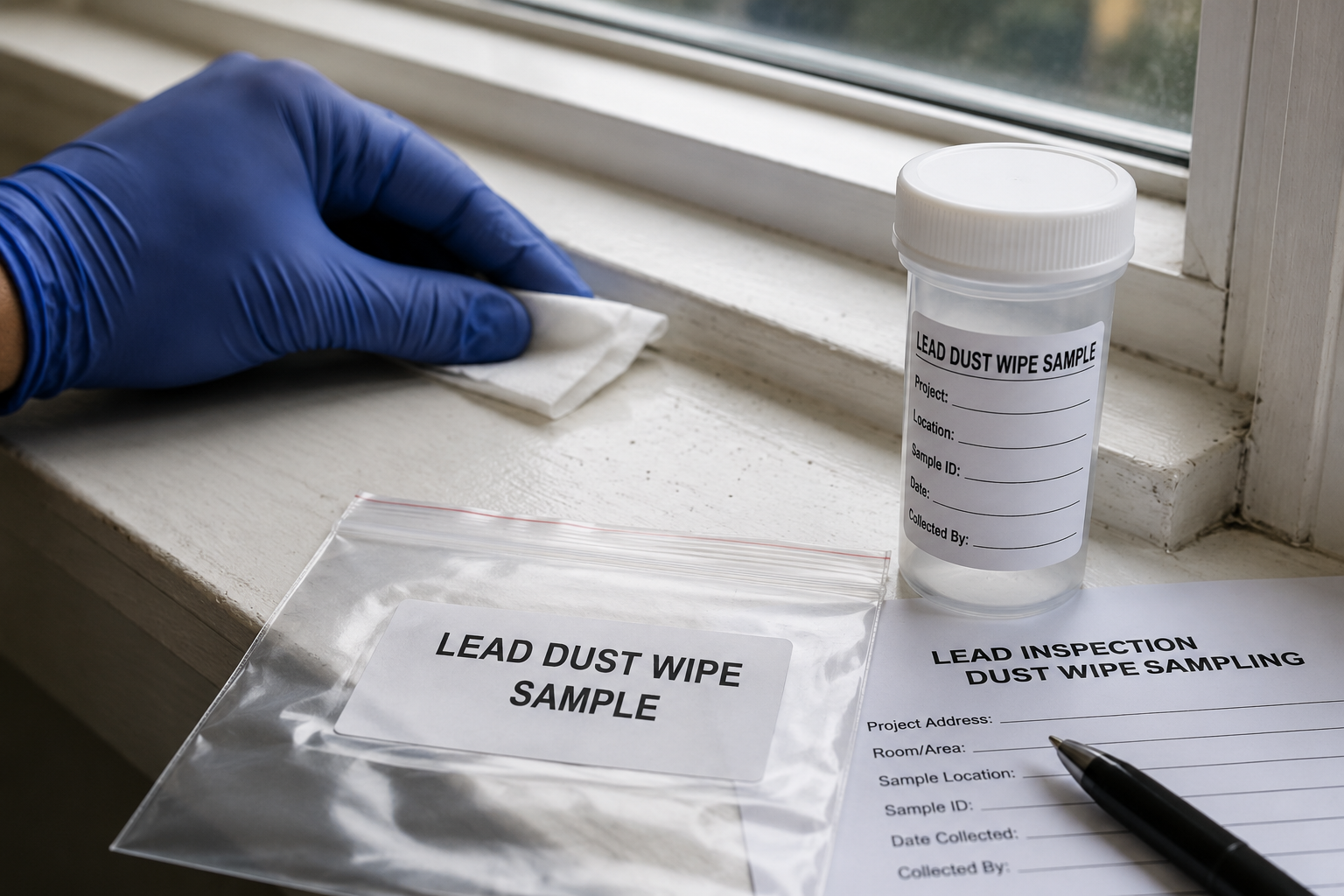
Protect your tenants and property with professional lead dust testing and visual inspection services. We perform thorough visual assessments to identify signs of deteriorated lead-based paint and collect dust wipe samples from floors, windowsills, and other surfaces to determine if hazardous lead dust is present.
- Visual inspection for peeling, chipping, or damaged paint
- Dust-wipe samples from floors and windowsills
- Testing by a certified laboratory
- Clear inspection results and documentation
- Guidance on correcting conditions that may cause a failed inspection
02
Post-Renovation Clearance Testing
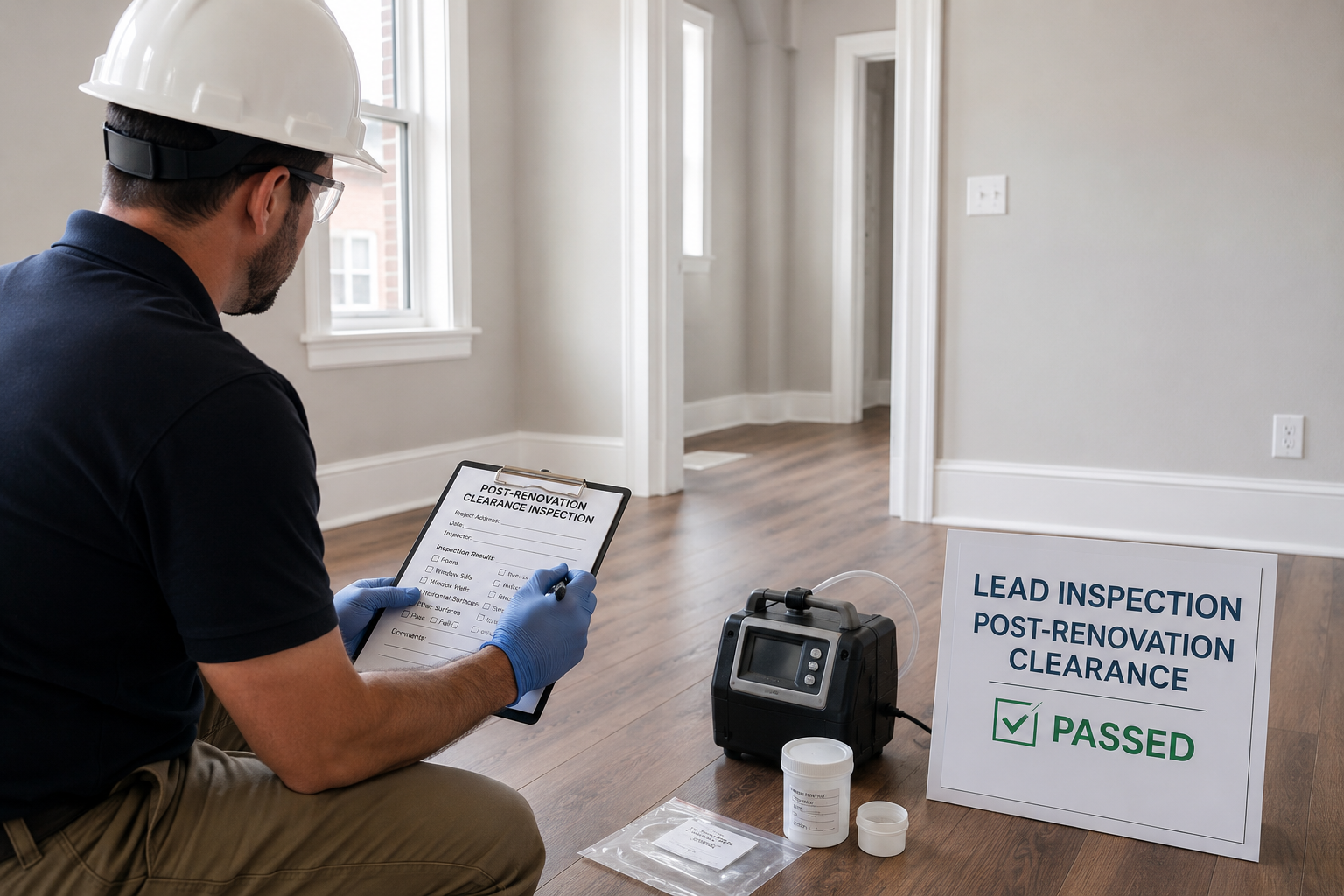
After any renovation, repair, or painting work in a pre-1978 property, NJ requires clearance testing to confirm lead dust levels are safe. We collect dust wipe samples and send them to an accredited laboratory — providing the documentation you need to re-occupy the unit.
- Post-Renovation Clearance Inspection
- Visual inspection of all renovated areas
- Lead-dust wipe sampling of required surfaces
- Checks for remaining dust, debris, and paint chips
- Laboratory analysis of collected samples
- Confirms whether the property meets lead-clearance standards
03
Risk Assessment Evaluation
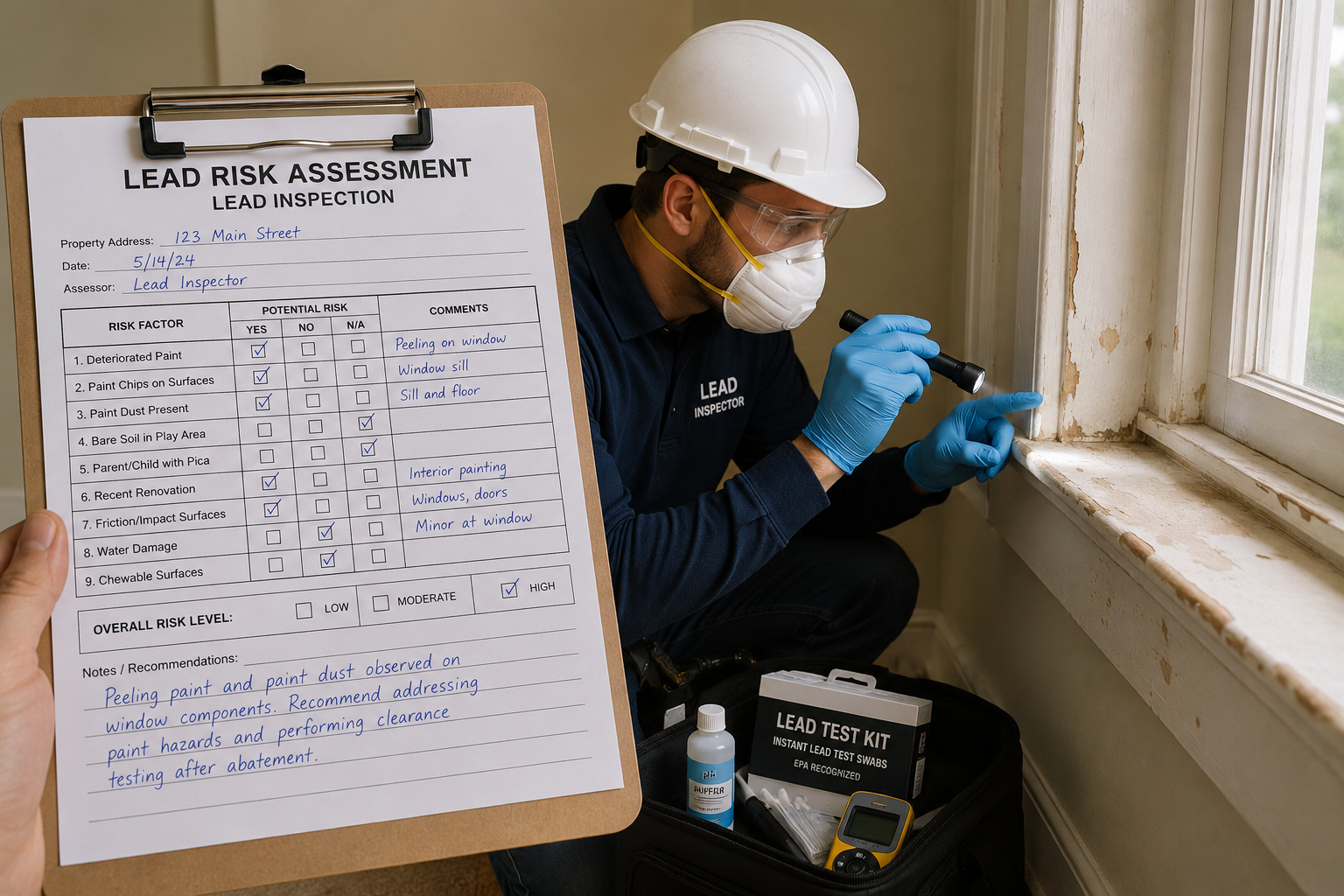
A comprehensive lead risk assessment goes beyond paint testing — it evaluates all potential lead hazards including paint, dust, soil, and water. The resulting written report satisfies NJ DCA requirements and gives landlords a complete picture of their compliance obligations.
- Evaluation of paint, dust, soil, and water hazards
- Identifies lead hazard control priorities
- Written risk assessment report for NJ compliance
- Recommended remediation plan included
The Inspection process
The Inspection Process
Frequently Asked Questions
Questions NJ landlords ask most
Lead inspection requirements can be confusing. Here are the questions we hear most often from NJ landlords and property managers.
What does the lead inspection process entail?
Do I need a lead inspection for my NJ rental property?
Yes, if your rental property was built before 1978. New Jersey law (P.L. 2003, c.311) requires landlords to have pre-1978 rental units inspected for lead-based paint hazards before a new tenant moves in. Failure to comply can result in fines, loss of rental license, and civil liability.
How long does a lead inspection take?
Most single-family homes and apartments take 30 minutes to an 1 hour depending on size and the number of rooms. Our inspectors test all painted surfaces systematically. Multi-unit buildings are scheduled by unit. You’ll receive your written report within at least 48 hours of the inspection.
What's included in the inspection report?
Your report includes a complete inventory of all tested surfaces, identification of any lead-based paint or lead hazards, photographs of tested areas, and a summary of findings. The report is signed and sealed by a licensed NJ lead inspector and is accepted by NJ municipalities for compliance documentation.
How do I schedule an inspection?
Use our request information form to request an inspection. We’ll confirm availability and schedule a booking confirmation within one business day. We serve all Southern New Jersey counties and can typically schedule within 1–4 days.
What if lead is found during the inspection?
If lead-based paint or hazards are identified, your report will specify the location and severity of each finding. We’ll explain your options — which may include cleaning, painting, encapsulation, enclosure, or removal — and can recommend NJ-licensed lead abatement contractors. A clearance inspection after remediation confirms the property is safe for occupancy.
NJ LANDLORD COMPLIANCE
Stay compliant. Protect your tenants
New Jersey’s lead disclosure laws place real obligations on landlords. A certified inspection report is your proof of compliance — and your protection against liability. We make it straightforward.
NJ COMPLIANCE REQUIREMENTS
What NJ landlords are required to do
- Pre-1978 rentals require inspection before a new tenant moves in, per NJ P.L. 2003, c.311.
- Written report required — verbal confirmation is not sufficient for NJ compliance.
- Landlord disclosure obligation — known lead hazards must be disclosed to prospective tenants.
- Penalties for non-compliance can include fines, loss of rental license, and civil liability.
- (856)326-5254
- info@njleadinspections.org
- Serving Southern New Jersey
© 2026 NJ Lead Inspections. All rights reserved.
Website created by – Technical Xpress